
Funky Maker: Mobile!
KinGamesCreatorMusic
4.1272.00 Reviews
- Version
- 1.11.40
- Installs
- 500.00K
- Age Rating
- Everyone
Screenshots
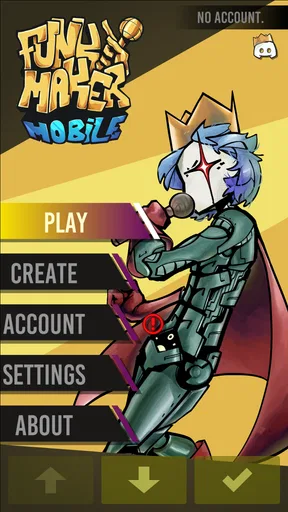
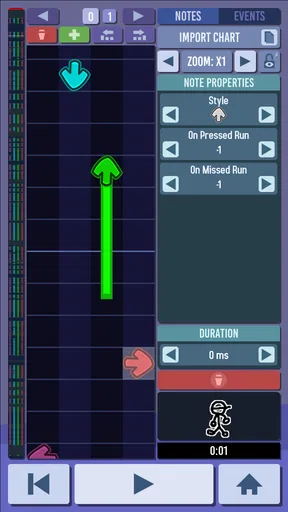
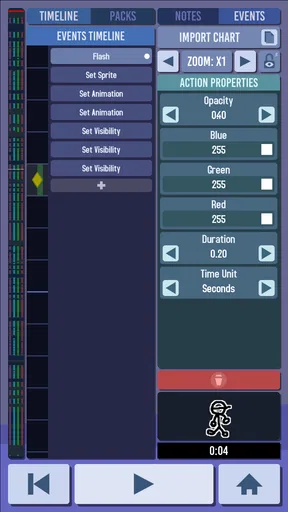
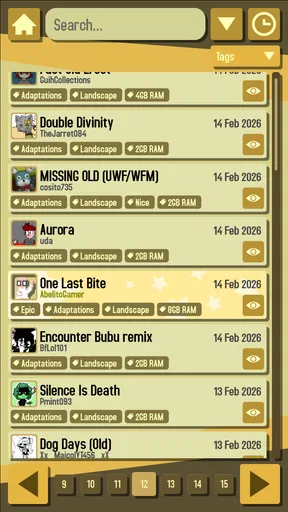
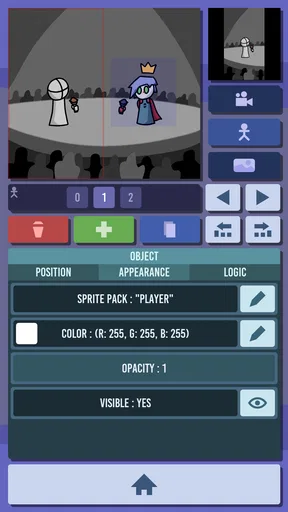
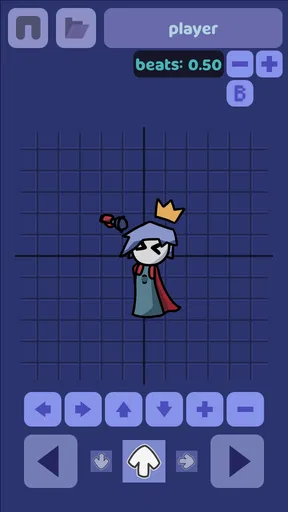
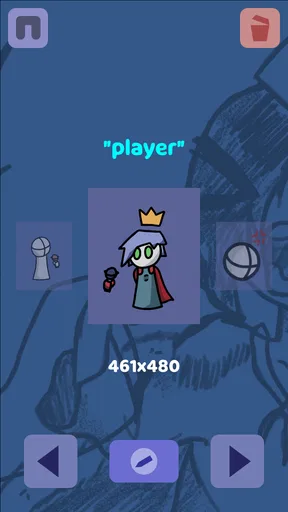

Our Review of Funky Maker: Mobile!
 Analysis by Appyee
I tried Funky Maker: Mobile! as the kind of game you open when you want something musical but do not want to commit to a long session. Its basic idea is immediately clear: press buttons in rhythm and stay connected to the music. That simplicity is a real strength during the first few plays, because I could understand the goal without reading a long tutorial or learning a complicated control system.
At the same time, a rhythm game lives or dies by what happens after the first burst of novelty. A catchy concept can feel fresh for an evening and then become repetitive if the songs, patterns, or sense of progress do not keep pulling you back. My experience with this game is therefore mixed in a useful way: it is easy to start, pleasant for short musical breaks, and approachable for a broad audience, but its lasting value depends heavily on how much variety and personal challenge you find in the available play.
KinGamesCreator presents it as a free music game, and that positioning makes sense. I see it less as a deep rhythm-training tool and more as a compact arcade-style activity for tapping along, testing your timing, and taking a quick break. If that is what you want, it can earn a place on your phone. If you are searching for a large rhythm library, a serious competitive ladder, or a highly structured long-term progression system, you should approach it with more modest expectations.
Why the first week feels so inviting
The strongest part of the experience is the low barrier to entry. The button-pressing format gives me an immediate action to perform, and the musical context makes that action feel more engaging than tapping through a standard reflex game. I do not need to memorize a complicated control scheme before enjoying the first session. That matters on mobile, where a game often gets only a few seconds to prove that it deserves another minute.
I found the format especially comfortable for short sessions. A quick attempt while waiting for an appointment, taking a break from work, or sitting on public transport feels more natural here than starting a game that demands a long uninterrupted run. The game’s appeal comes from the small loop of listening, reacting, and trying again. When I miss a beat, the mistake is easy to understand: my timing was off, rather than the game asking me to manage several unrelated systems at once.
The “Funky Maker” identity also gives the experience a playful tone. It sounds more expressive than a plain timing test, and that matters because rhythm games need personality. I enjoyed the feeling of interacting with music instead of simply watching it in the background. Even when a session was brief, the button presses gave me a reason to stay attentive.
For a new player, I would suggest beginning with relaxed sessions rather than immediately treating every attempt like a score challenge. The first useful skill is learning how the game presents its rhythm and how quickly your hands respond to it. Once that feels familiar, repeating a section becomes more meaningful because you are working on timing rather than still trying to understand the interface.
That approach also reveals one of the game’s less obvious strengths: it can function as a small concentration exercise. I would not describe it as a music-learning app, and I would not use it as a substitute for practicing an instrument. Still, the need to watch and listen at the same time makes it more mentally active than a passive music player. A few focused minutes can be a pleasant reset between tasks.
The audience rating of Everyone makes the game easier to recommend in shared households. I can imagine a younger player enjoying the immediate button-pressing action, while an adult might use it as a quick distraction. That accessibility does not mean every player will enjoy it equally. People who dislike repeating musical patterns or who prefer slower, strategic games may find the central loop too narrow.
The game is free, which removes the biggest obstacle to trying it. I could install it without first deciding whether the experience justified a purchase. That is important for a simple concept: the best way to judge whether this style works for you is to play it. A free download also makes it suitable for occasional use, although free access alone does not guarantee that it will remain interesting after the initial curiosity fades.
Its public reception suggests that plenty of players have found the format worthwhile, with an average rating of 4.1 from around 4.9 thousand ratings and more than 272 written reviews. The game has also passed 500 thousand installs. I read those figures as evidence of a healthy level of interest, not as proof that it will suit everyone. Rhythm games are unusually personal: a control response or musical style that feels satisfying to one player can feel awkward to another.
How I would use it during an ordinary day
My most realistic use case is a short break with a clear stopping point. I might open it after finishing a task, play several attempts while having a drink, and close it before the session turns into aimless scrolling. That kind of routine works because the game asks for attention without requiring a major commitment. It is also a better fit than a long-form game when my phone battery, time, or concentration is limited.
Another practical use is sharing the phone with someone who wants to try a game immediately. The basic rhythm interaction is easy to demonstrate: hand over the device, explain the idea, and let the other person discover the timing. I would not expect it to replace a party game with several players or a music game built around a large social community, but it can create a quick, informal challenge between two people.
One tip I found useful is to separate “learning attempts” from “score attempts.” During a learning attempt, I focus on recognizing the rhythm and keeping my hands relaxed. During a score attempt, I try to preserve consistency and avoid reacting emotionally to one mistake. Mixing those goals can make the game feel more frustrating than it really is. Treating each run as practice first makes repeated play feel more purposeful.
What remains after the novelty wears off
The more important question is whether the game can become a habit rather than a one-evening experiment. For me, the answer depends on the player’s relationship with repetition. If you enjoy gradually improving timing and replaying familiar material to make cleaner attempts, the central mechanic can continue to provide value. If you need frequent new content or a strong narrative reason to return, the experience may lose momentum sooner.
That distinction separates it from broader alternatives in the music-game category. Some rhythm games are built around extensive song collections, character development, unlockable systems, or competitive rankings. Those features create several reasons to return even when a particular song stops feeling exciting. Funky Maker: Mobile! is more focused. Its appeal comes from the direct interaction between the player’s timing and the music, so the game has fewer layers to distract from repetition.
I consider that focus both its identity and its main long-term limitation. A concentrated design can feel clean and satisfying because there is less clutter between me and the rhythm. However, it also means that the game must rely on the quality of its patterns and the player’s desire to improve. Someone who wants a collection-building routine may be happier with a larger music title, while someone who prefers an uncluttered timing challenge may appreciate this narrower approach.
For month-to-month use, I would build a small personal routine instead of opening it randomly. For example, I might play briefly on certain days, choose one session for accuracy, and use another for relaxed experimentation. The point is not to force a daily streak that the game may not be designed to support. The point is to give each return a purpose. Without that structure, the app risks becoming something I remember fondly but rarely open.
A second useful habit is to stop after a good attempt rather than continuing until frustration takes over. Rhythm games can encourage “one more try,” especially after a near miss. That can be motivating, but it can also turn a pleasant break into a repetitive struggle. I found the experience more sustainable when I ended a session with a sense of progress, even if the improvement was simply better concentration.
The current version is 1.11.40, and the game runs on Android 7.0 or later. That broad compatibility makes it practical for people using older Android devices, not only recent phones. Still, compatibility should not be confused with identical comfort on every handset. Rhythm play is sensitive to touch response, screen size, and general device performance. If your phone feels slow or the controls do not register comfortably, a game based on timing will feel less fair than a slower genre.
This is one of the trade-offs I would explain to a friend before recommending it. A simple rhythm interface is easy to understand, but simplicity makes responsiveness more noticeable. In a strategy game, a minor delay may be tolerable. Here, even a small feeling of uncertainty can interrupt the connection between what I hear and what I press. I would test it on the device I plan to use rather than assuming that the experience will feel identical everywhere.
Where repetition starts to become tiring
The principal source of fatigue is not the button pressing itself. It is the possibility that the same interaction may stop offering a meaningful new target. At first, I am learning the rhythm. Later, I am trying to improve. After that, I need either fresh musical situations or a stronger personal goal. If neither arrives, the game can become a familiar routine without much reason to continue.
This is why I would not recommend it to someone who wants a game to occupy long daily sessions for months. The focused design is better suited to short visits than marathon play. Playing for too long can make the music feel like a metronome and the controls feel mechanical. In my view, the game is more enjoyable when treated as a compact activity rather than a main gaming destination.
Another possible frustration is the gap between casual play and perfection. A player can enjoy pressing along without caring about flawless timing, but a player chasing high consistency may become very sensitive to every error. That is not necessarily a defect; precision is part of rhythm games. It does mean that the game’s emotional tone changes depending on your goal. Casual players may find it cheerful, while perfection-focused players may experience it as demanding.
I also think the game is less suitable for people who want strong musical discovery. A dedicated music game with a wide, regularly changing catalogue is usually better if your main motivation is hearing new songs. Here, the attraction is the act of responding to rhythm. That is a meaningful difference. I would choose this title for interaction first and musical variety second.
The maintenance burden appears relatively light from a player’s perspective because the game’s core idea is easy to revisit. I do not need to rebuild a complicated strategy every time I return. That helps it fit into a routine and reduces the mental cost of coming back after a break. The downside is that low maintenance can also mean low urgency. If there is no personal target waiting for me, it is easy to choose another app instead.
To keep it installed, I would want a clear reason that belongs to me: improving timing, sharing quick challenges, or using it as a deliberate screen break. I would not keep it merely because it is free or because I enjoyed the first session. Those are good reasons to try it, not necessarily reasons to give it permanent space.
Who should keep it installed
I would recommend Funky Maker: Mobile! to players who want a straightforward rhythm game that can be understood quickly and played in short bursts. It is a good match for someone who enjoys repeating a musical pattern to improve timing, prefers direct controls, and does not need a story or elaborate progression system to stay interested.
It also makes sense for families looking for an accessible game with an Everyone age rating, provided the player enjoys timing-based repetition. The free price makes experimentation easy, and the Android requirement reaching back to version 7.0 gives it a reasonable chance of working on older devices. I would still judge the final experience by touch responsiveness and comfort on the individual phone.
I would skip it if your ideal music game is a large, content-heavy platform with extensive collection systems, constant novelty, or a deep competitive structure. I would also skip it if you dislike replaying the same kind of challenge. A different rhythm title may be a better investment of your attention when variety, progression, or social competition matters more than clean button timing.
My best practical advice is to decide after several short sessions, not one long first impression. Try it when you are relaxed, then try it again on another day. Notice whether you are returning because you genuinely want to improve or only because the first session was new. That test answers the long-term question better than the download count or the initial excitement.
After the novelty fades, I see a modest but legitimate place for this game. It does not need to become a daily obsession to be worthwhile. Its strongest role is as a quick, focused musical diversion that I can pick up without preparation. The experience remains pleasant when I respect that scale and avoid expecting a full-sized rhythm platform from a compact concept.
My final view is positive but measured. KinGamesCreator has made an approachable free game with an immediately understandable hook, and the 4.1 average shows that it has connected with a substantial audience. I would keep it installed for short timing sessions and casual challenges, especially if I wanted something lighter than a feature-heavy alternative. Its lasting value comes from repeatable practice, not endless novelty, so whether it earns permanent space depends on how much satisfaction you get from making each attempt cleaner than the last.
Verdict
Strengths of Funky Maker: Mobile!
- Simple controls make it easy to start creating quickly.
- Bright visuals give the app a playful, energetic feel.
- Short sessions work well for casual mobile play.
- Creative tools encourage experimentation and personal expression.
- Runs well for players who prefer relaxed, low-pressure gameplay.
Limitations of Funky Maker: Mobile!
- The creative options may feel limited after extended use.
- Progress can become repetitive once the main mechanics are familiar.
- Some features may require patience or extra in-game resources.
- Small-screen controls can occasionally feel imprecise.
- Players seeking deep strategy may find the experience too lightweight.
Similar Picks in This Category
View All
Tiles Hop Music & Ball Game
AMANOTES PTE. LTD.4.3

Magic Tiles 3™ - Piano Game
AMANOTES PTE. LTD.4.6

Real Piano
Bilkon3.7

Piano Game: Classic Music Song
Dream Tiles Piano Game Studio4.0

Smash Colors: Music Ball Rush
BADSNOWBALL HONGKONG LIMITED4.2

Piano Music Go-EDM Piano Games
Joy Journey Music Games4.5
Frequently Asked Questions
What is Funky Maker: Mobile!, and what can I do with it?
Funky Maker: Mobile! is a creative mobile game focused on designing and building your own experiences rather than simply playing a fixed campaign. You can experiment with available tools, arrange objects, create levels or scenes, and test your ideas directly on your phone. It is especially appealing to players who enjoy customization, experimentation, and sharing imaginative creations instead of following only predefined objectives.
Is Funky Maker: Mobile! suitable for beginners without game-development experience?
Yes, the app is approachable for beginners, although it may take some time to understand all of its creative options. The basic workflow is generally easy to follow: choose elements, place them in your project, adjust settings, and test the result. New users should begin with a small scene and gradually explore advanced tools, because trying to learn every feature at once can feel overwhelming on a mobile screen.
Does Funky Maker: Mobile! require an internet connection to play or create?
The need for an internet connection may depend on the specific feature you are using. Creating and testing local projects can often be possible without being constantly online, while downloading content, accessing community features, receiving updates, or sharing creations may require connectivity. Before traveling or using mobile data, it is worth opening the app once and checking which tools remain available offline on your device.
Are there in-app purchases, advertisements, or other costs in Funky Maker: Mobile!?
The availability of advertisements, optional purchases, or premium content can vary according to the platform, region, and version installed. Users should review the store listing before downloading and check the purchase details shown inside the app. If the game offers additional assets or features, remember that these are not always necessary for basic experimentation, so you can evaluate the free tools first.
Will Funky Maker: Mobile! run well on every Android or iOS device?
Performance depends on your device’s operating system, processor, memory, available storage, and screen size. Creative applications can become more demanding when projects contain many objects or effects, so older phones and tablets may experience slower loading, reduced responsiveness, or occasional crashes. Install the latest compatible version, keep sufficient free storage available, and save or back up important projects whenever possible.
Play our best games!


